
Most publications describe themselves the same way.
Better reach.
Better service.
Better results.
None of those statements are wrong. They are simply fragile.
When every publication claims to be better, advertisers are forced to compare. When buyers compare, price becomes the easiest decision point. That is how good publications drift into commodity territory.
The issue is not quality. It is structure.
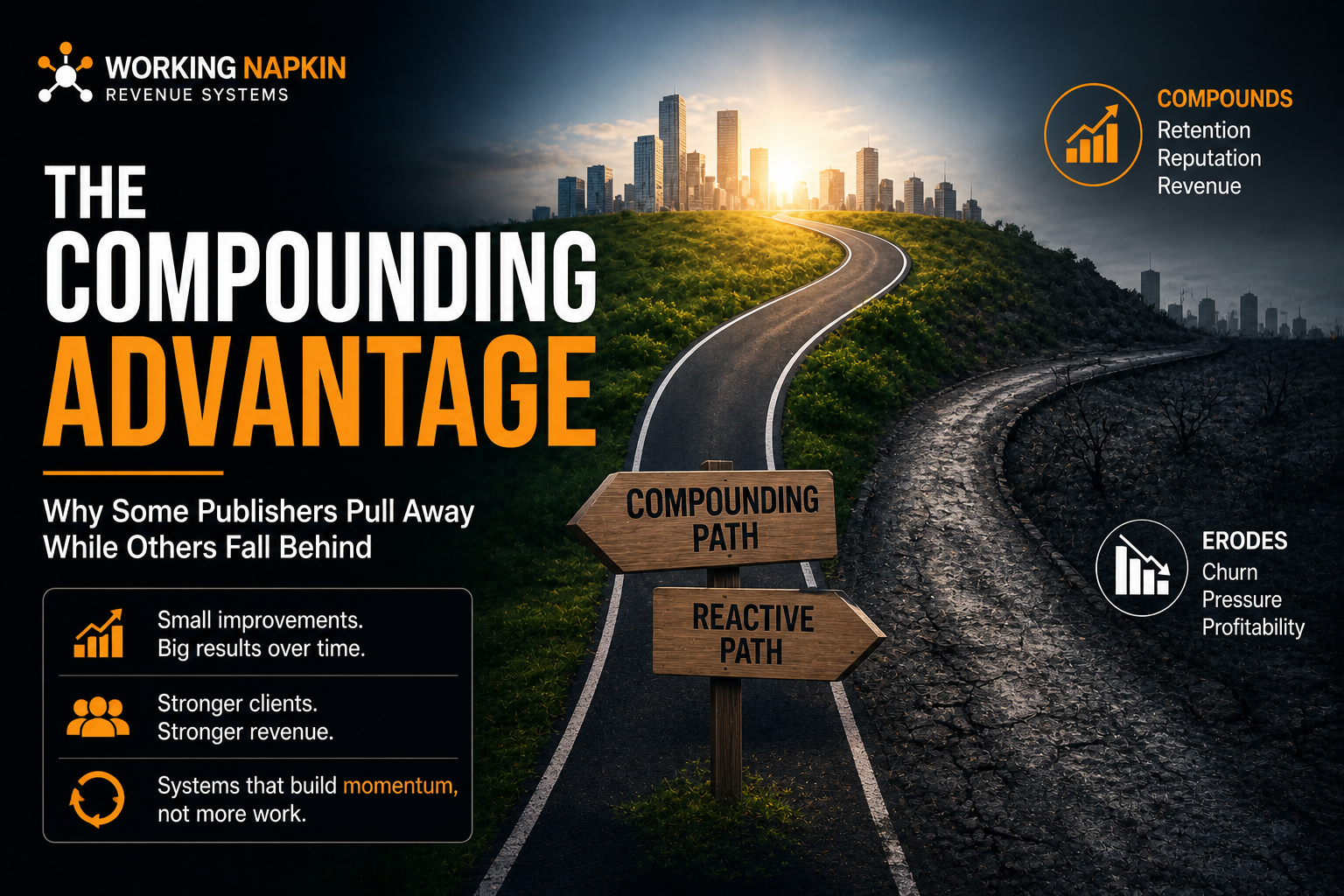
Better improves the same promise. Different changes how revenue works.
If your revenue depends on who followed up, who had time that week, or who remembered to call before renewal, then you are competing on effort. Effort does not create structural difference. It creates fluctuation.
Structural difference comes from how revenue is managed.
When revenue is supported by a lifecycle system, several things change.
Accounts at risk are identified before they cancel.
Dormant advertisers are reactivated.
Prospects are educated before sales conversations begin.
Pipelines become visible.
That is not better selling. That is different infrastructure.
Most publications try to win by improving activity. Few change the system connecting that activity to money.
Working Napkin approaches this as revenue architecture, not marketing improvement. The distinction matters. Marketing is discretionary. Revenue infrastructure is existential.
Being better is incremental. Being structurally different changes how money moves.
In competitive markets, marginal improvement keeps you comparable. Structural difference makes comparison irrelevant.
Revenue clarity is where advantage begins.